Why the Season Window Exists
Sap flow in sugar maples (Acer saccharum) is driven by a pressure differential between the inside of the tree and the atmosphere. During winter, starch stored in living cells is converted to sucrose, building osmotic pressure. When daytime temperatures rise above freezing while nights remain below freezing, gas bubbles inside the xylem expand and contract, creating a pumping effect that moves sap toward any open wound — including a tap hole.
Once nighttime temperatures consistently stay above freezing, or once the tree begins budding, this pressure mechanism stops functioning and the sap turns milky and unusable. The window between first consistent freeze-thaw cycling and bud break defines the harvest season.
Seasonal Timing by Region
The typical sugaring window varies by province and by year-to-year weather patterns. The figures below reflect general historical patterns and should not be treated as fixed dates.
| Region | Typical Start | Typical End | Notes |
|---|---|---|---|
| Southern Ontario (Essex, Elgin) | Late February | Late March | Earliest Ontario region; warm springs can shorten season |
| Central Ontario (Grey, Bruce, Simcoe) | Early March | Early April | Heaviest Ontario production zone |
| Eastern Ontario (Frontenac, Leeds) | Mid-March | Mid-April | Later start, can extend into April |
| Eastern Townships (Quebec) | Mid-March | Mid-April | High-volume commercial production area |
| Laurentians / Montérégie (Quebec) | Late February – Early March | Early April | Lower elevation starts earlier |
| New Brunswick / Nova Scotia | Mid-March | Late April | Higher latitude extends season |
Elevation shifts the window by roughly one week per 100 metres of gain. A sugar bush at 400 metres elevation will typically see sap flow one to two weeks later than a comparable stand at sea level in the same region.
Tap Count and Tree Health
Standard Canadian practice ties tap count to trunk diameter measured at breast height (approximately 1.4 metres from the ground). Over-tapping slows tree recovery and can reduce future yields.
| Trunk Diameter at Breast Height | Recommended Taps |
|---|---|
| Under 25 cm (10 in) | Do not tap |
| 25–38 cm (10–15 in) | 1 tap |
| 38–51 cm (15–20 in) | 1–2 taps |
| Over 51 cm (20 in) | 2 taps |
| Over 76 cm (30 in) | 3 taps (uncommon; requires sound tree health) |
These guidelines reflect recommendations in Ontario Ministry of Agriculture, Food and Rural Affairs extension publications. Trees should be assessed individually; any tree showing signs of crown dieback, decay, or mechanical damage should be tapped conservatively or skipped.

Tap Hole Placement
Tap holes are typically drilled at a slight upward angle (5–10 degrees) to allow sap to drain toward the spout by gravity when using bucket systems. On vacuum tubing systems, the angle is less critical since negative pressure draws sap regardless of slope.
Placement Guidelines
- Drill at breast height or slightly above; avoid the base of the tree where soil organisms are more active.
- Space new tap holes at least 15 cm horizontally and 60 cm vertically from any previous-year tap wound.
- Standard drill bit diameter is 7/16 inch for metal spouts and 5/16 inch for smaller plastic spouts common with tubing systems.
- Tap depth is typically 4–5 cm; going deeper does not increase flow and damages more sapwood.
- Tap on the south or southwest face of the tree if possible — these faces accumulate more warmth and tend to produce slightly earlier flow.
Bucket vs. Tubing Systems
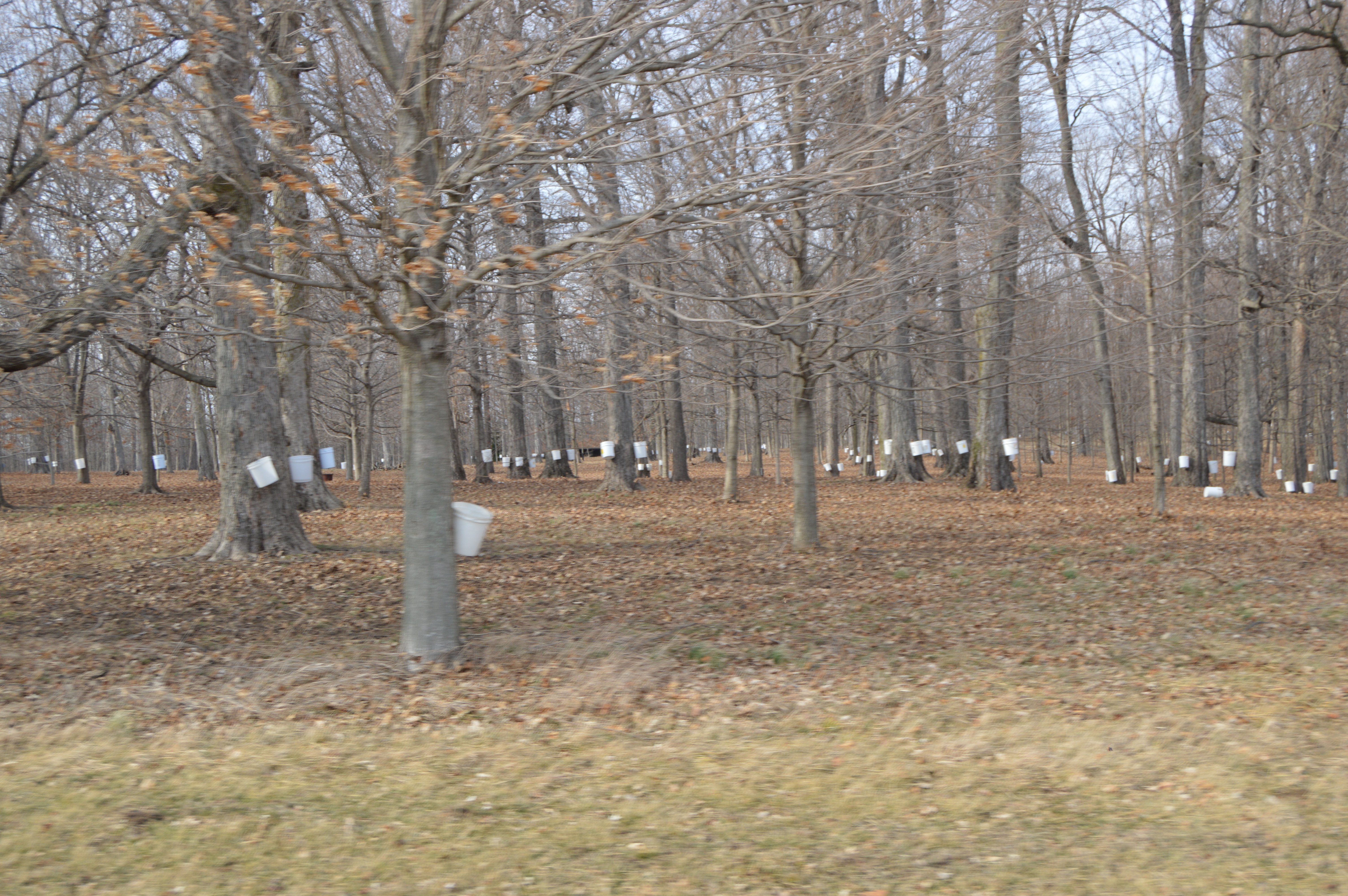
Small operations — typically under 150 taps — frequently use covered metal or food-grade plastic buckets. Buckets require daily collection, which means sap quality is easier to monitor but labour demands are higher per tap.
Tubing systems route sap through a network of lateral lines into a main line that feeds a collection tank. Gravity-fed tubing reduces manual collection trips. Vacuum-assisted tubing (using a pump to lower line pressure to 20–25 inHg below atmospheric) can increase sap yield per tap across the season. The infrastructure cost per tap is higher, but the labour cost per litre of sap collected is lower at volumes above roughly 100 taps.
Ending the Season
Taps should be pulled when:
- Sap begins running cloudy, milky, or develops an off-odour (yeast and bacterial activity increases as temperatures rise).
- Buds on nearby trees begin to break — a reliable visual indicator that the pressure mechanism is shutting down.
- Overnight temperatures consistently remain above 0°C.
After taps are removed, the tree naturally closes the wound through callus tissue formation over the following growing season. No wound treatment is needed or recommended.
References
- Ontario MAFRA: Maple Syrup Production
- Agriculture and Agri-Food Canada: Maple Products
- Producteurs et productrices acéricoles du Québec (PPAQ)
Last updated: May 2026