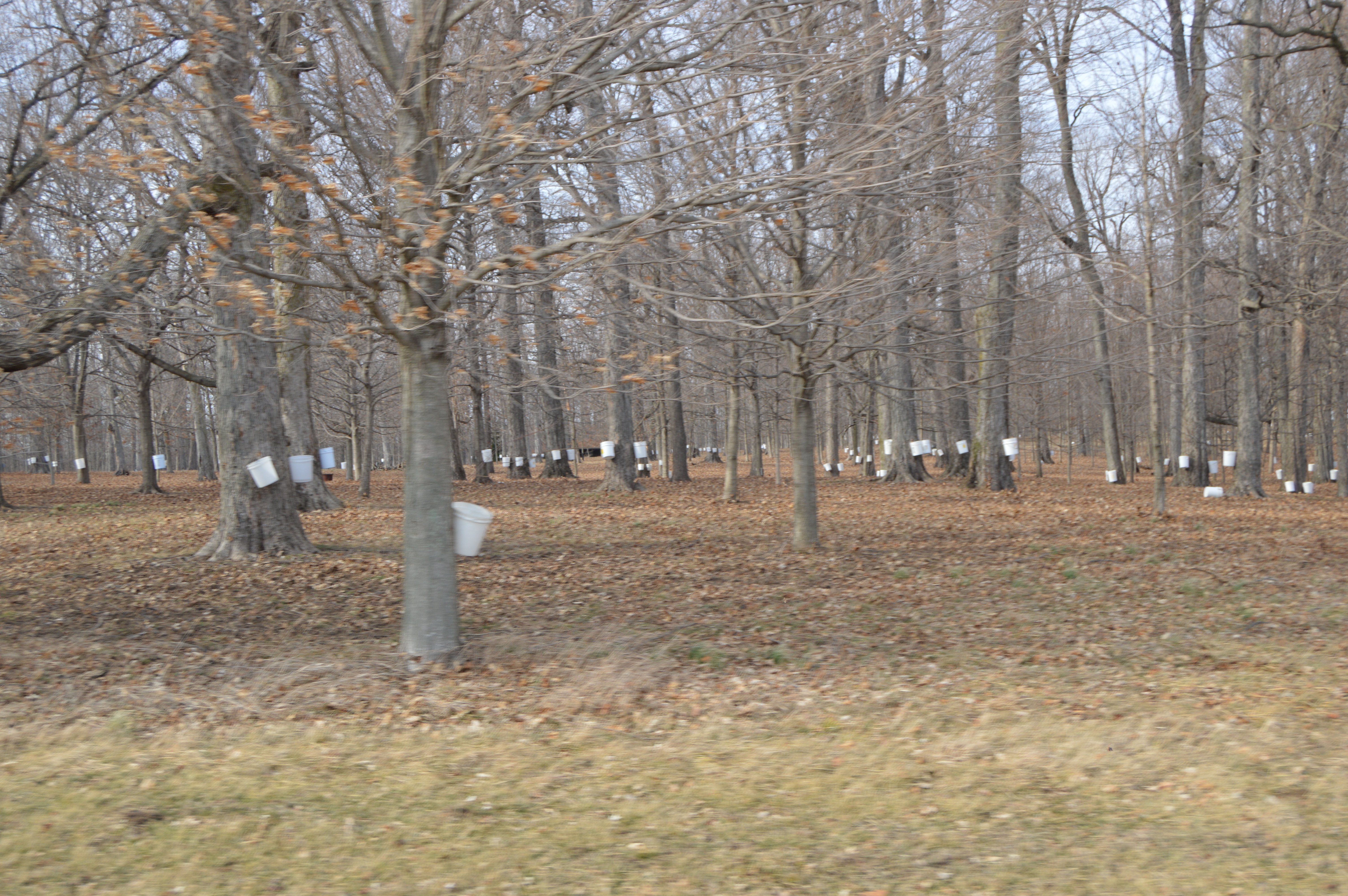
Sugar Bush
Tapping Schedules and Sugar Bush Timing in Canada
When to tap, how many taps per tree diameter, and how freeze-thaw cycles in Ontario and Quebec drive sap flow timing.
Tapping schedules, sap Brix measurement, and evaporator efficiency for backyard and small commercial operations across Canada.
Practical reference material covering the main stages of small-scale maple syrup production in Canadian sugar bushes.
When to tap, how many taps per tree diameter, and how freeze-thaw cycles in Ontario and Quebec drive sap flow timing.

How refractometers and hydrometers measure sap Brix, what drives daily variation, and what concentration levels mean for boiling ratios.

Pan sizing, fuel consumption benchmarks, draw-off timing, and the role of preheaters in reducing boiling time for operations under 200 taps.
An overview of the variables that affect yield and syrup quality in a Canadian sugar bush operation.
Sap flow in sugar maples depends on alternating sub-freezing nights and above-freezing days. This pressure differential is the primary driver of the spring run in Ontario and Quebec.
A tree with a trunk diameter under 25 cm (10 in) at chest height should not be tapped. Standard practice allows one tap for trees between 25–45 cm, and two taps for trees over 45 cm.
Sap averaging 2% sugar (2°Brix) requires roughly 40 litres to produce one litre of finished syrup at 66°Brix. Higher-Brix sap reduces this ratio proportionally.
Divided-pan (flue pan + flat pan) configurations improve efficiency over single-pan setups by maintaining a continuous density gradient as sap moves toward the draw-off point.
Vacuum-assisted tubing lines can increase sap yield per tap compared to bucket systems by creating a negative pressure that draws sap more completely from the tree between freeze-thaw events.
In most of southern Ontario and Quebec, the sugaring season runs from late February through early April. Elevation, latitude, and year-to-year temperature patterns shift this window by several weeks.
Quebec produces the majority of the world's maple syrup supply, with Ontario representing the primary production province outside Quebec. The provinces of New Brunswick and Nova Scotia also host active sugar bush operations.
Small operations — commonly defined as those with fewer than 500 taps — face different constraints than large commercial producers. Equipment scale, manual labour availability, and proximity to equipment suppliers all factor into production decisions for backyard and hobby producers.
The articles on this site focus specifically on the technical parameters relevant to operations in this smaller scale range, drawing on publicly available data from Agriculture and Agri-Food Canada and provincial extension resources.

Use this form to submit a question or note. No account is required.